
How Industrial LED Lighting Supports Safer and More Efficient Operations
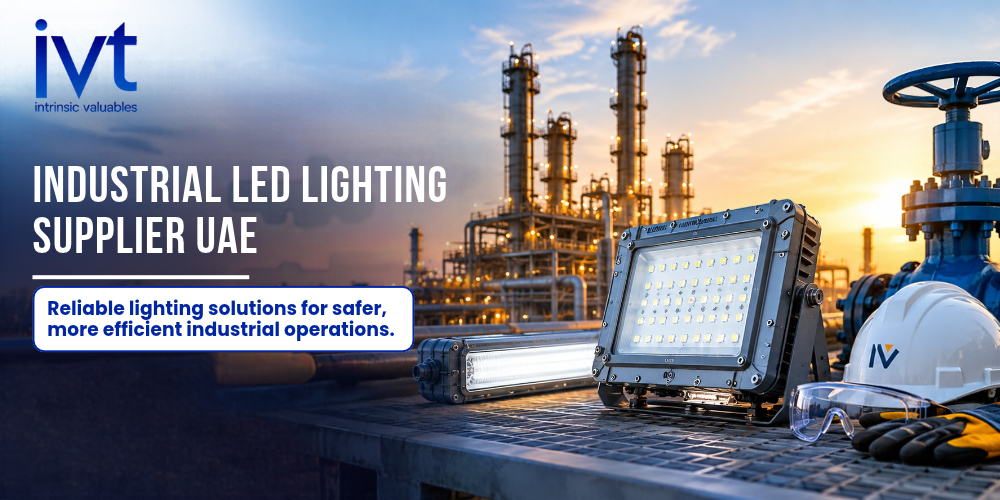
Industrial facilities depend on reliable lighting to support daily operations, equipment inspections, and maintenance activities. In the UAE, where industrial sites can face high temperatures, dust, moisture, and demanding operating conditions, selecting suitable lighting requires more than comparing brightness and price. Working with an Industrial LED lighting supplier in UAE businesses can evaluate and help procurement teams identify lighting solutions suited to their facilities, operating environments, and safety requirements. The right selection can improve visibility, support energy efficiency, and help maintenance teams manage long-term operating costs. Industrial LED Lighting for Demanding Work Environments Industrial LED lighting is used in manufacturing plants, warehouses, workshops, processing facilities, storage terminals, and outdoor work areas. Compared with traditional lighting technologies, LED systems can offer efficient energy use, dependable illumination, and reduced maintenance requirements, depending on product quality and operating conditions. Suitable lighting helps workers inspect machinery, read equipment labels, monitor processes, and move safely through operational areas. It can also support routine maintenance by improving visibility around electrical panels, production lines, and equipment installations. However, general industrial LED lights are not automatically suitable for hazardous locations. Areas containing flammable gases, vapours, or combustible dust may require lighting specifically certified for the relevant hazardous-area classification. Equipment selection should follow the area’s classification, applicable certification requirements, and installation conditions. Key Factors in Selecting Industrial Lighting Solutions Before purchasing industrial lighting, procurement teams should assess how the equipment will perform in its intended environment. These factors should be assessed together rather than treating price as the only purchasing criterion. Technical documentation should be reviewed before a product is approved for installation. Supporting Oil and Gas Operations with the Right Equipment Oil and gas facilities require coordinated equipment selection across processing, storage, transfer, and maintenance activities. Lighting must support visibility in relevant work areas, while other equipment must meet the operational demands of the process. When sourcing industrial equipment for oil & gas industry applications, buyers may need to consider flow meters, pumps, loading arms, hose reels, filters, actuators, and associated installation components. Each item should be selected according to process requirements, operating conditions, material compatibility, and the manufacturer’s technical documentation. For example, a fuel transfer area may require suitable lighting for routine inspections alongside equipment designed for the fluid being handled. Where hazardous-area requirements apply, the lighting and electrical accessories must be assessed separately against the site’s classification and applicable requirements. Coordinating procurement across related product categories can help project teams review compatibility, documentation, and maintenance needs before installation. Safety Equipment and Process Reliability Lighting is one part of a broader workplace safety approach. Workers may also require task-specific personal protective equipment (PPE), including protective clothing, gloves, eye protection, safety footwear, hearing protection, or respiratory protection, depending on the hazards identified. An Oil & gas PPE supplier industrial buyers should be able to provide relevant product information so procurement teams can check suitability for the intended task. PPE selection should follow workplace risk assessments, applicable requirements, and manufacturer guidance rather than relying on a product’s general description alone. Industrial valves are equally important in fluid-handling operations. They regulate, isolate, or direct the movement of liquids and gases through process systems. Buyers evaluating an Industrial valves supplier in UAE should consider pressure and temperature limits, fluid compatibility, connection type, operating method, and maintenance access. Appropriate lighting supports equipment inspection, while correctly selected valves and PPE address different operational requirements. Together, these considerations contribute to a more organised approach to industrial procurement. Finding a Suitable Industrial Supply Partner in the UAE Choosing a supplier involves more than checking product availability. Buyers should assess technical documentation, product suitability, communication, warranty conditions, and the supplier’s ability to understand project requirements. Intrinsic Valuables supports industrial sourcing requirements across relevant equipment categories. Businesses planning lighting upgrades or broader industrial purchases can discuss their application, environmental conditions, and technical requirements to identify suitable options. Before requesting a quotation, prepare the installation location, required light output, operating-temperature range, hazardous-area classification where applicable, quantity, and any project specifications. Providing these details helps suppliers assess the request more accurately. For industrial facilities, a well-informed purchasing decision balances performance, safety, maintenance, and cost over the equipment’s service life. Conclusion Selecting industrial lighting requires careful consideration of visibility, energy use, environmental conditions, maintenance, and hazardous-area requirements. These factors are particularly important for oil and gas facilities and other demanding industrial environments across the UAE. Intrinsic Valuables can be approached for enquiries about industrial LED lighting and related equipment requirements. Contact the team with your project specifications to discuss suitable sourcing options for your facility. Frequently Asked Questions 1. What should businesses look for in an industrial LED lighting supplier? Review product specifications, environmental suitability, energy performance, warranty conditions, and technical documentation. For hazardous locations, verify that the proposed lighting has the appropriate certification for the site’s classification. 2. Are all industrial LED lights suitable for oil and gas facilities? No. General industrial lights may suit ordinary operating areas, but locations where explosive atmospheres can occur may require appropriately certified hazardous-area lighting. The selection must match the specific area classification. 3. How can industrial LED lighting help reduce operating costs? LED lighting can reduce electricity consumption compared with less efficient alternatives. Maintenance and replacement costs may also decrease, depending on product quality, operating hours, and installation conditions. 4. Can businesses source lighting and other industrial products together? Yes, depending on supplier availability and product requirements. Buyers can enquire about industrial lighting, process equipment, valves, and PPE while confirming specifications and documentation for each category.
Intrinsically Safe Electrical Fixtures for Hazardous Industrial Environments
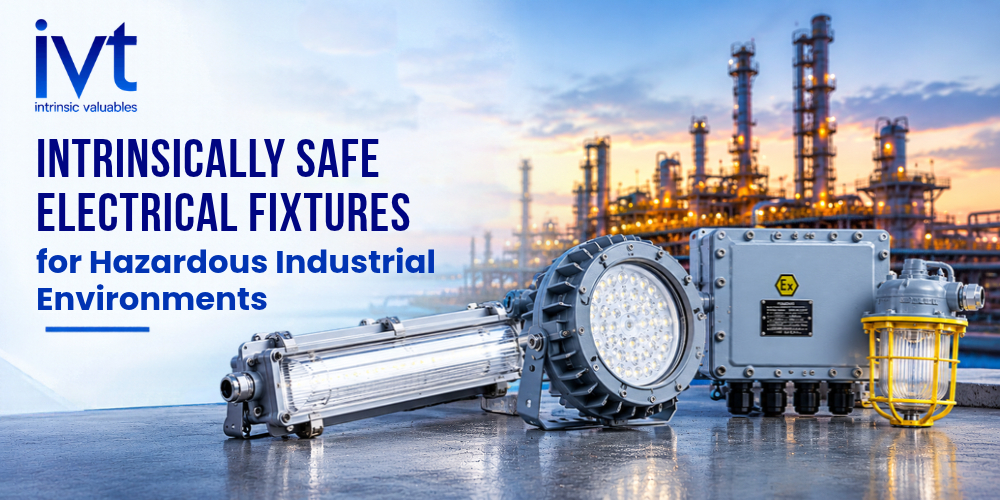
Electrical installations play an important role in workplace safety, operational reliability, and visibility across industrial facilities. In environments where flammable gases, vapours, or combustible dust may be present, selecting suitable equipment helps reduce ignition risks and supports safe operations. For industrial buyers in the UAE, understanding protection methods, environmental conditions, and certification requirements is essential when specifying electrical products. When electrical energy must be controlled in potentially hazardous environments, intrinsically safe electrical fixtures may form part of the solution, depending on the application. The right selection starts with understanding the site conditions and the protection requirements of each installation. Understanding Intrinsically Safe Electrical Fixtures Intrinsic safety is a protection technique that limits electrical and thermal energy to prevent ignition under specified conditions. It is commonly applied to instrumentation, sensors, and control circuits used in hazardous locations. Equipment must be selected according to its intended function, operating parameters, and approved protection level. Although both methods address ignition risks, intrinsic safety and explosion-proof protection work differently. Intrinsically safe equipment limits the energy available to cause ignition, whereas explosion-proof equipment is designed to contain an internal explosion and prevent it from igniting the surrounding atmosphere under specified conditions. These methods are not interchangeable. Engineers must verify the hazardous-area classification and applicable equipment approvals before making a purchasing decision. Essential Electrical Products for Industrial Facilities Industrial plants use different electrical products to maintain safe connections, provide emergency visibility, and illuminate working areas. The appropriate selection depends on the operating environment and the facility’s safety requirements. Electrical Installation Components Secure connections and suitable enclosures are essential in industrial electrical systems. For hazardous locations, Explosion proof electrical installation equipment may include approved junction boxes, cable glands, connectors, and enclosures designed for specific protection methods. Before purchasing these components, buyers should verify the equipment’s certification, temperature classification, applicable gas or dust group, and compatibility with the installation. Incorrectly selected cable entries or enclosures can compromise the protection of the complete electrical system. Emergency Lighting for Hazardous Areas During power failures, Explosion Proof Emergency Lights help maintain visibility and support safe movement along designated escape routes. Depending on the facility’s layout, these lights may be required near process equipment, storage areas, access corridors, and emergency exits. Selection should account for the hazardous-area classification, required illumination, backup operating duration, mounting position, and applicable approvals. Emergency lighting should also be incorporated into the facility’s evacuation and maintenance plans. Outdoor Industrial Lighting For loading areas, industrial yards, and outdoor maintenance zones, Industrial weatherproof flood lights can provide illumination in environments exposed to rain, dust, and humidity. Their suitability depends on the required light output, mounting arrangement, environmental conditions, and maintenance needs. However, weatherproofing alone does not make a light suitable for an explosive atmosphere. Where hazardous gases, vapours, or combustible dust may be present, the product must also meet the relevant hazardous-area requirements. Key Factors When Selecting Electrical Fixtures Before placing an order, procurement teams, engineers, and maintenance managers should evaluate several practical considerations. Equipment should be specified according to documented site requirements rather than price alone. Installation, inspection, and maintenance must be carried out by appropriately qualified personnel following applicable regulations and manufacturer guidance. Electrical Installation Solutions for UAE Industries Oil and gas facilities, petrochemical plants, manufacturing units, and fuel-handling operations across the UAE face different electrical and environmental challenges. A classified process area may require certified hazardous-area equipment, while an outdoor loading yard may need durable lighting designed for local environmental exposure. For example, procurement teams sourcing intrinsically safe electrical fixtures should provide the intended application, site classification, operating conditions, and certification requirements before confirming product suitability. This information helps suppliers identify relevant options and reduces the risk of selecting incompatible equipment. Intrinsic Valuables Trading FZE (IVT) is an industrial supply business supporting industrial product enquiries. Buyers can Contact Intrinsic Valuables to discuss their electrical fixture and installation equipment requirements and request relevant product information. Technical suitability should always be confirmed against the manufacturer’s documentation and project specifications. Conclusion Selecting electrical fixtures requires careful consideration of safety requirements, operating conditions, certification, and long-term maintenance. Appropriate equipment specifications help industrial facilities support reliable operations while addressing the risks associated with their working environments. For product information and industrial supply enquiries, contact Intrinsic Valuables Trading FZE (IVT) to discuss your requirements and identify suitable products for further technical evaluation. Frequently Asked Questions 1. What are intrinsically safe electrical fixtures? Intrinsically safe electrical equipment uses a protection method that limits electrical and thermal energy to prevent ignition under specified conditions. Its suitability depends on circuit parameters, equipment design, hazardous-area classification, and applicable certification. 2. How do intrinsically safe and explosion-proof equipment differ? Intrinsically safe protection limits the energy that could cause ignition. Explosion-proof protection is designed to contain an internal explosion and prevent it from igniting the surrounding atmosphere under specified conditions. The appropriate method depends on the application. 3. Where are explosion-proof emergency lights used? These lights may be installed in appropriately classified oil and gas facilities, petrochemical plants, hazardous storage areas, and other locations where explosive atmospheres may occur. Their specifications and placement should follow the facility’s emergency lighting plan. 4. What should buyers consider when selecting electrical fixtures? Buyers should review hazardous-area classification, protection methods, certification, temperature ratings, IP ratings, environmental exposure, and installation compatibility. Manufacturer documentation and qualified technical guidance help confirm whether a product meets the site’s requirements.
Industrial Equipment Procurement for Oil Terminals & Refineries
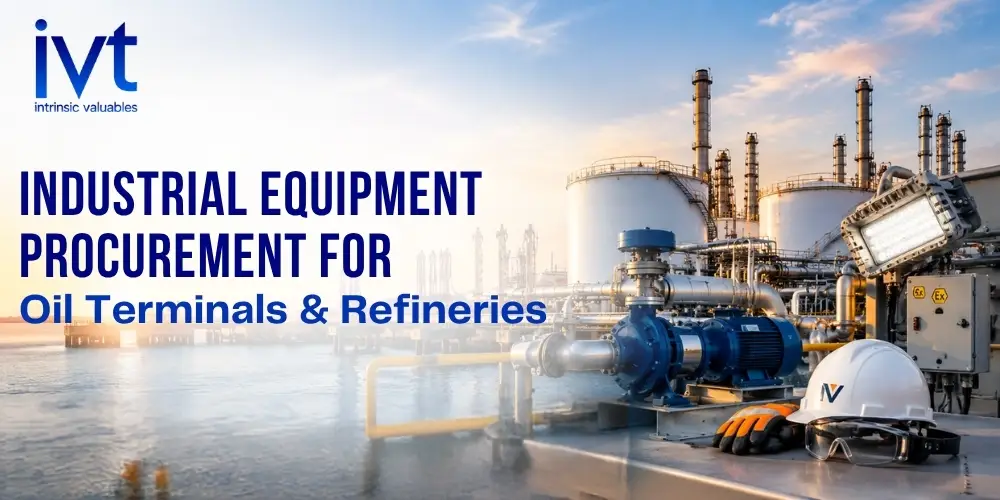
Oil terminals and refineries rely on dependable equipment to support fuel transfer, storage, measurement, processing, and day-to-day maintenance. Because these facilities often operate continuously, equipment selection can directly affect operational efficiency, maintenance requirements, and workplace safety. For facilities handling flammable liquids, gases, and vapors, procurement also needs to account for hazardous-area requirements. Working with an experienced intrinsically safe equipment supplier for oil & gas can help businesses identify suitable solutions for demanding industrial environments. Intrinsic Valuables supports industrial procurement requirements with equipment and solutions for oil & gas, fuel handling, processing, and other critical applications. Understanding Equipment Requirements Before Procurement A successful procurement process begins with understanding how and where equipment will be used. Different areas within a terminal or refinery can have different operating and environmental requirements. Before requesting quotations, procurement teams should consider: Having these requirements clearly defined makes it easier to compare suppliers and avoid purchasing equipment that is unsuitable for the application. Essential Equipment for Oil Terminal Operations Oil terminals involve the continuous movement of fuels between storage tanks, pipelines, loading systems, and transportation facilities. Reliable equipment is therefore essential for maintaining consistent transfer and storage operations. When businesses need to buy industrial equipment for oil terminals, the required solutions may include pumps, flow meters, filtration systems, loading equipment, valve actuators, hose reels, nozzles, grounding systems, and overfill protection equipment. Pumps and Fluid Transfer Systems Pumps should be selected according to fluid characteristics, required flow rate, pressure, temperature, and operating conditions. Proper selection can help maintain consistent transfer performance while reducing unnecessary wear and operational problems. Flow Measurement and Control Accurate measurement is important during fuel transfer and custody-transfer applications. Flow meters allow operators to monitor the movement of liquids and support more reliable quantity measurement across transfer systems. Valves and Actuation Valves help control the movement of liquids through pipelines and process systems. Depending on the application, manual or motor-operated solutions may be required for flow control, isolation, and maintenance activities. Electrical Solutions for Hazardous Areas Electrical equipment requires careful consideration in oil terminals and refineries because some areas may contain flammable gases, vapors, or combustible substances. Equipment must therefore be selected according to the actual site conditions and applicable hazardous-area requirements. Lighting is another important part of industrial operations. Storage areas, loading zones, access routes, maintenance locations, and process areas require dependable illumination for routine activities and safe movement. Suitable LED lighting for oil & gas facilities can provide reliable visibility across demanding industrial environments. When selecting lighting, procurement teams should consider installation location, environmental exposure, ingress protection, operating conditions, maintenance access, and hazardous-area requirements where applicable. Safety Equipment Should Be Included in Procurement Procurement planning should not focus only on process equipment. Worker protection is equally important in facilities where employees may encounter fuels, chemicals, machinery, heat, or other workplace hazards. Depending on the application, personal protective equipment may include protective clothing, gloves, safety footwear, eye protection, helmets, and respiratory protection. Working with an experienced Oil & gas PPE supplier UAE can help businesses source protective products according to their operational requirements. PPE should be selected based on the specific hazards involved, frequency of use, employee comfort, and compatibility with other protective equipment. Choosing the Right Industrial Supplier Product suitability is only one part of effective procurement. The supplier’s technical knowledge, documentation, availability, and support can also influence the success of a project. Procurement teams should consider: For critical projects, clear communication between procurement teams, engineers, maintenance personnel, and suppliers can help reduce specification errors and unnecessary delays. Considering Long-Term Equipment Value The lowest purchase price does not always represent the best procurement decision. Equipment that requires frequent replacement, creates maintenance problems, or contributes to unexpected downtime may cost more over its operating life. A practical procurement strategy should consider the total value of the equipment, including purchase cost, installation, maintenance, spare parts, energy use, expected service life, and technical support. For critical systems, reliability and suitability should therefore be considered alongside the initial purchase price. A Practical Approach to Oil & Gas Equipment Procurement Oil terminals and refineries require equipment that can perform reliably under demanding operating conditions. From fuel-transfer systems and measurement equipment to lighting and worker protection, every procurement decision should be based on the facility’s actual requirements. Intrinsic Valuables helps businesses source industrial solutions with a focus on practical application, equipment suitability, and dependable supply. By defining specifications clearly, evaluating suppliers carefully, and considering long-term operating requirements, procurement teams can build a more reliable equipment supply chain for oil terminals and refinery operations. Frequently Asked Questions What equipment is commonly required for oil terminals? Oil terminals may require pumps, flow meters, filtration systems, loading equipment, valve actuators, hose reels, nozzles, grounding systems, and overfill protection solutions. The exact equipment depends on the facility’s fuel-handling and storage requirements. What should be considered when purchasing equipment for an oil terminal? Procurement teams should consider the type of fluid, flow rate, pressure, temperature, material compatibility, installation environment, hazardous-area requirements, maintenance needs, and available technical documentation. Why is hazardous-area equipment important in oil and gas facilities? Some areas of oil and gas facilities may contain flammable gases or vapors. Equipment used in these locations needs to be selected according to the area’s classification and the specific operating conditions. What type of lighting is suitable for oil and gas facilities? Lighting should be selected according to the installation environment, exposure conditions, required illumination, maintenance requirements, and hazardous-area classification where applicable. Why is PPE important during oil terminal operations? PPE provides workers with protection against hazards associated with fuels, chemicals, machinery, and other industrial activities. The appropriate PPE should be selected according to the specific task and workplace risks.
Intrinsically Safe & Explosion Proof Equipment in UAE Oil & Gas
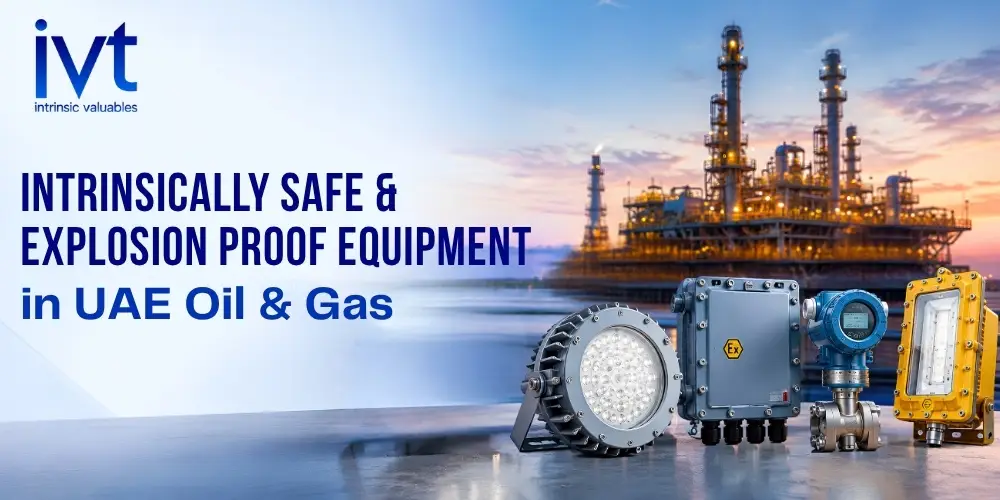
Handling volatile hydrocarbons, combustible vapors, and pressurized gases requires strict attention to safety. In oil & gas facilities, even a small electrical spark or excessive surface temperature can become an ignition source when flammable substances are present. For facilities across Abu Dhabi, Dubai, Sharjah, and other industrial areas, choosing suitable hazardous-area equipment is therefore an important part of safe plant operation. Working with a reliable Intrinsically safe equipment supplier for oil & gas can help businesses identify equipment that matches their application, hazardous-area classification, and operating conditions. The Core Difference: Intrinsically Safe (Ex i) vs. Explosion Proof (Ex d) Industrial plant managers often come across both intrinsically safe and explosion-proof or flameproof equipment. Although both are designed for hazardous environments, they use different protection methods. Intrinsically Safe (Ex i) protection controls the amount of electrical and thermal energy available in a circuit. The energy is kept below the level that could ignite a specified hazardous atmosphere under defined conditions. This protection method is commonly associated with instrumentation, sensors, field transmitters, and communication devices. Explosion Proof / Flameproof (Ex d) protection uses a strong enclosure designed to withstand an internal explosion and prevent flames or hot gases from escaping into the surrounding atmosphere. This approach is commonly used for equipment that requires more substantial electrical or mechanical construction, including certain motors, switchgear, junction boxes, and industrial electrical equipment. The correct protection method depends on the application and hazardous-area requirements. Working with an ATEX Certified Equipment Supplier can make it easier for engineering and procurement teams to review certification details and select equipment suitable for the intended installation. Why Hazardous-Area Equipment Matters in Oil & Gas Oil & gas facilities can contain flammable gases, vapors, and liquids throughout different stages of processing, storage, and transfer. Equipment installed in these locations must therefore be selected with the surrounding environment in mind. Working with an industrial equipment supplier for the oil & gas industry can help businesses identify solutions that match their specific operational and safety requirements. Hazardous-area requirements can vary between locations within the same facility. Storage tanks, processing units, loading areas, pump rooms, and maintenance areas may have different classifications and equipment requirements. This is why simply choosing a product labelled as “explosion proof” is not enough. Engineers should consider factors such as the Zone classification, gas group, temperature class, ingress protection, ambient temperature, and applicable certification before installation. Proper equipment selection can also help maintenance teams avoid unnecessary replacements and ensure that installed products remain appropriate for the operating environment. Specialized Electrical Fixtures for Harsh Industrial Conditions Oil & gas facilities in the UAE and wider Middle East can face demanding environmental conditions, including high temperatures, dust, humidity, and exposure to saline environments in coastal areas. These conditions can affect the performance and service life of ordinary industrial equipment. Using certified intrinsically safe electrical fixtures where required can help address the electrical safety requirements of classified areas. However, the fixture still needs to match the specific installation conditions. Important factors may include: These considerations are especially important when equipment is being installed outdoors or in locations exposed to challenging environmental conditions. What to Check Before Selecting Hazardous-Area Equipment Before purchasing equipment for an oil & gas facility, engineering and procurement teams should first understand the requirements of the installation. Start by identifying the hazardous-area Zone and the type of flammable substance that may be present. The required equipment protection method, gas group, and temperature class can then be evaluated against the site requirements. It is also important to review the product’s certification and technical documentation. Depending on the project, documentation may include certificates, declarations, technical datasheets, installation instructions, and wiring information. A reliable Explosion Proof Equipment Supplier UAE can support this process by helping customers understand product specifications and identify solutions according to their application. Supporting Safe and Reliable Oil & Gas Operations Safety in a hazardous environment does not depend on one product alone. Correct equipment selection, proper installation, regular inspection, and suitable maintenance all work together to reduce potential ignition risks. For this reason, businesses should look beyond product availability when selecting a supplier. Technical understanding, certification documentation, product suitability, and application support can all be important when working on oil & gas projects. At Intrinsic Valuables Trading FZE (IVT), industrial solutions are focused on the requirements of critical applications where safety, reliability, and compliance are important. The company provides equipment solutions for hazardous and industrial environments based on project and application requirements. Whether you are planning a new installation, replacing existing equipment, or reviewing your hazardous-area requirements, you can contact Intrinsic Valuables to discuss your project and equipment needs. Conclusion Oil & gas facilities require equipment that can operate safely and reliably in environments where flammable gases and vapors may be present. Understanding the difference between intrinsically safe and explosion-proof protection is an important first step when selecting equipment for these applications. From hazardous-area electrical fixtures to instrumentation and other industrial equipment, every product should be selected according to the actual site classification and operating conditions. Proper certification, technical documentation, installation, and maintenance should also be considered as part of the overall safety approach. For businesses searching for suitable hazardous-area solutions in the UAE, Intrinsic Valuables Trading FZE (IVT) can help with equipment requirements for oil & gas and other critical industrial applications. Reach out with your project requirements to discuss the appropriate solution. Frequently Asked Questions What is intrinsically safe equipment used in oil & gas? Intrinsically safe equipment limits electrical and thermal energy to prevent ignition in hazardous areas. It is commonly used for sensors, transmitters, instrumentation, and communication devices. What is the difference between intrinsically safe and explosion-proof equipment? Intrinsically safe equipment limits energy within a circuit, while explosion-proof equipment uses a strong enclosure to contain an internal explosion and prevent ignition from spreading. Why is ATEX certification important? ATEX certification confirms that equipment meets applicable requirements for use in potentially explosive atmospheres. Always check the certification details for the intended application. How do