
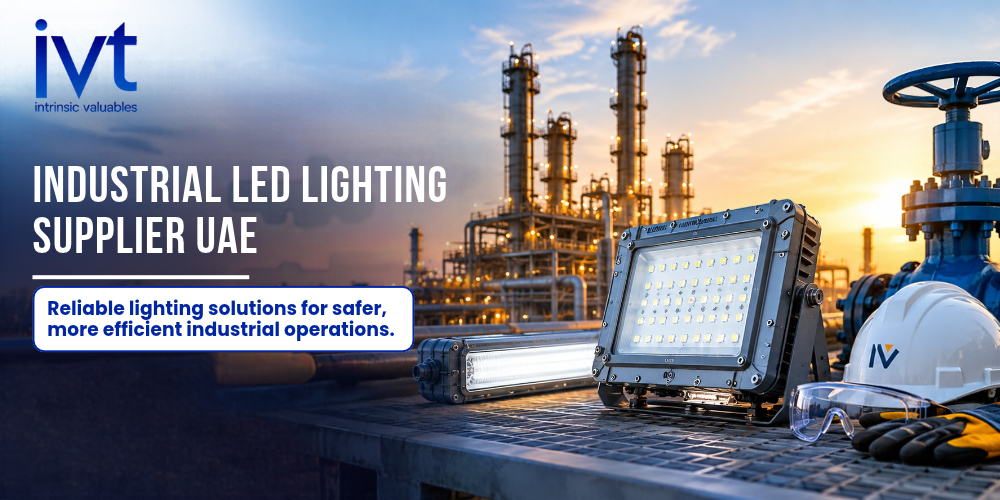
Industrial facilities depend on reliable lighting to support daily operations, equipment inspections, and maintenance activities. In the UAE, where industrial sites can face high temperatures, dust, moisture, and demanding operating conditions, selecting suitable lighting requires more than comparing brightness and price.
Working with an Industrial LED lighting supplier in UAE businesses can evaluate and help procurement teams identify lighting solutions suited to their facilities, operating environments, and safety requirements. The right selection can improve visibility, support energy efficiency, and help maintenance teams manage long-term operating costs.
Industrial LED Lighting for Demanding Work Environments
Industrial LED lighting is used in manufacturing plants, warehouses, workshops, processing facilities, storage terminals, and outdoor work areas. Compared with traditional lighting technologies, LED systems can offer efficient energy use, dependable illumination, and reduced maintenance requirements, depending on product quality and operating conditions.
Suitable lighting helps workers inspect machinery, read equipment labels, monitor processes, and move safely through operational areas. It can also support routine maintenance by improving visibility around electrical panels, production lines, and equipment installations.
However, general industrial LED lights are not automatically suitable for hazardous locations. Areas containing flammable gases, vapours, or combustible dust may require lighting specifically certified for the relevant hazardous-area classification. Equipment selection should follow the area’s classification, applicable certification requirements, and installation conditions.
Key Factors in Selecting Industrial Lighting Solutions
Before purchasing industrial lighting, procurement teams should assess how the equipment will perform in its intended environment.
- Light output and distribution: Select suitable illumination levels and beam patterns for workstations, access routes, storage areas, and inspection points.
- Temperature and environmental protection: Check the manufacturer’s operating-temperature range, ingress protection rating, and suitability for exposure to dust, moisture, or corrosive conditions.
- Energy efficiency: Compare power consumption and expected operating hours. Lighting controls and appropriate layouts may further reduce unnecessary energy use.
- Durability and maintenance: Review construction materials, serviceability, expected operating life, warranty terms, and replacement requirements.
- Hazardous-area suitability: Where explosive atmospheres may occur, verify the required protection concept, equipment marking, certification, and suitability for the classified zone.
These factors should be assessed together rather than treating price as the only purchasing criterion. Technical documentation should be reviewed before a product is approved for installation.
Supporting Oil and Gas Operations with the Right Equipment
Oil and gas facilities require coordinated equipment selection across processing, storage, transfer, and maintenance activities. Lighting must support visibility in relevant work areas, while other equipment must meet the operational demands of the process.
When sourcing industrial equipment for oil & gas industry applications, buyers may need to consider flow meters, pumps, loading arms, hose reels, filters, actuators, and associated installation components. Each item should be selected according to process requirements, operating conditions, material compatibility, and the manufacturer’s technical documentation.
For example, a fuel transfer area may require suitable lighting for routine inspections alongside equipment designed for the fluid being handled. Where hazardous-area requirements apply, the lighting and electrical accessories must be assessed separately against the site’s classification and applicable requirements.
Coordinating procurement across related product categories can help project teams review compatibility, documentation, and maintenance needs before installation.
Safety Equipment and Process Reliability
Lighting is one part of a broader workplace safety approach. Workers may also require task-specific personal protective equipment (PPE), including protective clothing, gloves, eye protection, safety footwear, hearing protection, or respiratory protection, depending on the hazards identified.
An Oil & gas PPE supplier industrial buyers should be able to provide relevant product information so procurement teams can check suitability for the intended task. PPE selection should follow workplace risk assessments, applicable requirements, and manufacturer guidance rather than relying on a product’s general description alone.
Industrial valves are equally important in fluid-handling operations. They regulate, isolate, or direct the movement of liquids and gases through process systems. Buyers evaluating an Industrial valves supplier in UAE should consider pressure and temperature limits, fluid compatibility, connection type, operating method, and maintenance access.
Appropriate lighting supports equipment inspection, while correctly selected valves and PPE address different operational requirements. Together, these considerations contribute to a more organised approach to industrial procurement.
Finding a Suitable Industrial Supply Partner in the UAE
Choosing a supplier involves more than checking product availability. Buyers should assess technical documentation, product suitability, communication, warranty conditions, and the supplier’s ability to understand project requirements.
Intrinsic Valuables supports industrial sourcing requirements across relevant equipment categories. Businesses planning lighting upgrades or broader industrial purchases can discuss their application, environmental conditions, and technical requirements to identify suitable options.
Before requesting a quotation, prepare the installation location, required light output, operating-temperature range, hazardous-area classification where applicable, quantity, and any project specifications. Providing these details helps suppliers assess the request more accurately.
For industrial facilities, a well-informed purchasing decision balances performance, safety, maintenance, and cost over the equipment’s service life.
Conclusion
Selecting industrial lighting requires careful consideration of visibility, energy use, environmental conditions, maintenance, and hazardous-area requirements. These factors are particularly important for oil and gas facilities and other demanding industrial environments across the UAE.
Intrinsic Valuables can be approached for enquiries about industrial LED lighting and related equipment requirements. Contact the team with your project specifications to discuss suitable sourcing options for your facility.
Frequently Asked Questions
1. What should businesses look for in an industrial LED lighting supplier?
Review product specifications, environmental suitability, energy performance, warranty conditions, and technical documentation. For hazardous locations, verify that the proposed lighting has the appropriate certification for the site’s classification.
2. Are all industrial LED lights suitable for oil and gas facilities?
No. General industrial lights may suit ordinary operating areas, but locations where explosive atmospheres can occur may require appropriately certified hazardous-area lighting. The selection must match the specific area classification.
3. How can industrial LED lighting help reduce operating costs?
LED lighting can reduce electricity consumption compared with less efficient alternatives. Maintenance and replacement costs may also decrease, depending on product quality, operating hours, and installation conditions.
4. Can businesses source lighting and other industrial products together?
Yes, depending on supplier availability and product requirements. Buyers can enquire about industrial lighting, process equipment, valves, and PPE while confirming specifications and documentation for each category.